Remind vs. Remember

Don’t Say
Remember me to make a doctor’s appointment tomorrow.
– That song remembers me of our trip to Cape Cod.
– I reminded that I have to work on Tuesday.
– I reminded to pick up milk at the store.

Say This:
Remind me to make a doctor’s appointment tomorrow.
– That song reminds me of our trip to Cape Cod.
– I remembered that I have to work on Tuesday.
– I remembered to pick up milk at the store.

Remember (Don’t forget):

  • Remember  
    • is the opposite of “forget”
    • Remember is something you think about from your own memory – it’s internal
    • Remember + something
      • I remembered your birthday.
      • I remember the first day we met.
    • Remember + to (She remembered to call her mother.)
    • Remember + that (I remembered that there is no school today.)
    • YouGlish examples of remember (also remembers and remembered)
  • Remind
    • Remind is to help someone remember something – it’s external
    • Remind + someone + to
      • Carla, please remind me to do my homework
      • I have to remind my father to take his medicine.
    • Remind + someone + of
      • That smell reminds me of springtime.
      • That dog reminded me of the dog I had when I was a boy.
    • YouGlish examples of remind (also reminds and reminded)

Below is more explanation especially for Portuguese speakers (one here for Spanish speakers, and one more for everyone)

Floor vs. Ground

Don’t Say
– (In your kitchen) I dropped a glass on the ground.
– (In your son’s bedroom) Please pick up all your dirty clothes from the ground.
– (In a parking lot) I found $20 on the floor.
– (At a park) I’m throwing bread on the floor for the birds.

Say This:
– (In your kitchen) I dropped a glass on the floor.
– (In your son’s bedroom) Please pick up all your dirty clothes from the floor.
– (In a parking lot) I found $20 on the ground.
– (At a park) I’m throwing bread on the ground for the birds.

Remember:

  • Outside – Use ground  
  • Inside – Use floor  
  • Sometimes English considers some natural spaces bounded, like a room
    So… the ocean floor and the forest floor
    Ex: We studied the ocean floor in science class.
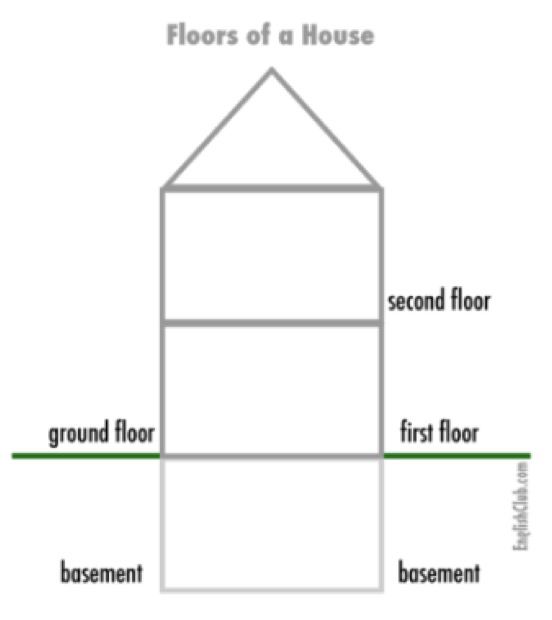
  • but… what is a “ground floor”??
    • The ground floor of a tall building is usually the same as the ‘first floor’ – at the ground level.

Thanks Alan!

“She’s” Means “She Is” or “She Has”

Don’t Say
She’s can work tomorrow.  (She is can work tomorrow.)
He’s can’t eat fish. (He is can’t eat fish.)
She’s can’t come on Tuesday.
He’s can swim fast.

Say This:
She can work tomorrow.
He can’t eat fish.
She can’t come on Tuesday.
He can swim fast.

Remember:

  • She’s is a contraction of she+is, and sometimes, of she+has
    • She’s hungry. (She is hungry.)
    • She’s got to go home. (She has got to go home.)
  • He’s is a contraction of he+is, and sometimes, of he+has
  • Don’t use she’s or he’s in any other situations.
    • NO
      • She’s like to dance. (She likes to dance.)
      • He’s go to school every Friday. (He goes to school every Friday.)
    • YES
      • He’s very happy today. (He is very happy today.)
      • She’s sleeping now. (She is sleeping now.)

Short Answers for “Does she have…?”

Question: Does she have a car?

Don’t Say
– Yes, she has. (or Yes, she have.)
– No, she has not. (or No, she haven’t)

Say This:
– Yes, she does.
– No, she doesn’t.

Remember:

  • If the QUESTION begins with “Does”, ANSWER with the verb does.
  • Does is used with he, she, or it.
  • Does he have a headache? — Yes, he does. (No, he doesn’t.)
  • Does she have a problem? — Yes, she does.  (or No, she doesn’t.)
  • Does your computer have a camera? — Yes, it does. (No, it doesn’t)
  • Does she have…. any children? many friends? a good job?

Short Answers for “Do you have…?”

Question: Do you have a brother?

Don’t Say
Yes, I have.
No, I have not.

Say This:
Yes, I do.
No, I don’t.

Remember:

  • If the QUESTION begins with “Do”, ANSWER with the verb do.
  • Do you have a brother?  — Yes, I do. (No, I don’t)
  • Do you have a job? — Yes, I do. (No, I don’t)
  • Do you have…. any ideas? any plans for the weekend?  any questions?

— Thanks to Jen for this article —

I’LL See You Tomorrow

Don’t say: 
– I see you tomorrow.
– I go with you now.
– I do my homework next weekend.
– I tell you when she comes home.
– I call you Monday.

Say this:
– I’ll see you tomorrow.    (I will see you tomorrow)
– I’ll go with you now.
– I’ll do my homework next weekend.
– I’ll tell you when she comes home.
– I’ll call you Monday.

Remember:

  • Use I’ll as the shortened form of I will when talking about something you will do.
  • I’ll = I + will 
  • Be sure to pronounce the whole word, not just the I
  • Listen to a lot more people pronounce I’ll on YouGlish

Something Happening Now

Don’t say: 
– Look! The baby walking!
– Where is your sister?  She’s work in Boston today.
– What are your kids doing right now?  They playing soccer at the school.
– Sorry, I can’t go to lunch with you.  I eat a sandwich right now.

Say this:
– Look! The baby is walking!
– Where is your sister?  She’s working in Boston today. (or She is working)
– What are your kids doing right now?  They’re playing soccer at the school. (or They are playing)
– Sorry, I can’t go to lunch with you.  I’m eating a sandwich right now. (or I am eating)

Remember:

  • When you talk about something happening NOW, for most verbs, you use this form:
    Verb to-be (am, are, is) + verb + ing

    • He is cooking.
    • I am making the bed.
    • The doctor is flying to California.
    • Everyone in class is reading.
  • This verb tense is called “present continuous”, or “present progressive”.

What Does This Mean?

Don’t say: 
– What it means?
– What this means?
– What means this?
– What means [xx]? (such as What means hyperbole? or What means doodle?)

Say this:
– What does it mean?
– What does this mean?
– What does [xx] mean?  such as…
– What does hyperbole mean?
– What does doodle mean?

Remember:

  • When you don’t understand what something means and you want to ask someone about it, start your question with What does...
  • What does this emoji mean?  
  • What does sibling mean?